If you live in the Chattanooga area, your ash trees face a direct and immediate threat. The Emerald Ash Borer (EAB), an invasive wood-boring beetle, has been moving through Tennessee with devastating efficiency. For homeowners from Signal Mountain to Ringgold, this pest represents an ecological crisis that can lead to hazardous property conditions and expensive removals if not caught early.
The Emerald Ash Borer strikes quickly. Once a tree shows significant symptoms, structural integrity begins to fail. This requires specialized tree service response to manage risk. At Big Woody's Tree Service, the EAB has dismantled thriving canopies in mere seasons. If you have ash trees on your property, you need to recognize infestation signs before damage becomes irreversible.
Why the Emerald Ash Borer is a Crisis for Ash Trees
The Emerald Ash Borer destroys trees from within, not outside. Adult beetles feed on leaves—minor damage—but larvae are the killers. They bore into the tree and feed on inner bark (phloem), the "highway" trees use to transport water and nutrients. By chewing through this layer, larvae essentially strangle the tree.
Chattanooga's lush environment provides perfect habitat for these pests. Without intervention, infested ash trees have near-zero survival rates. However, early mobilization by Big Woody's Tree Service provides treatment options. If infestation is too advanced, rapid removal prevents dead trees from becoming falling hazards during Tennessee storms.
1. Thinning Canopy and Upper Branch Dieback
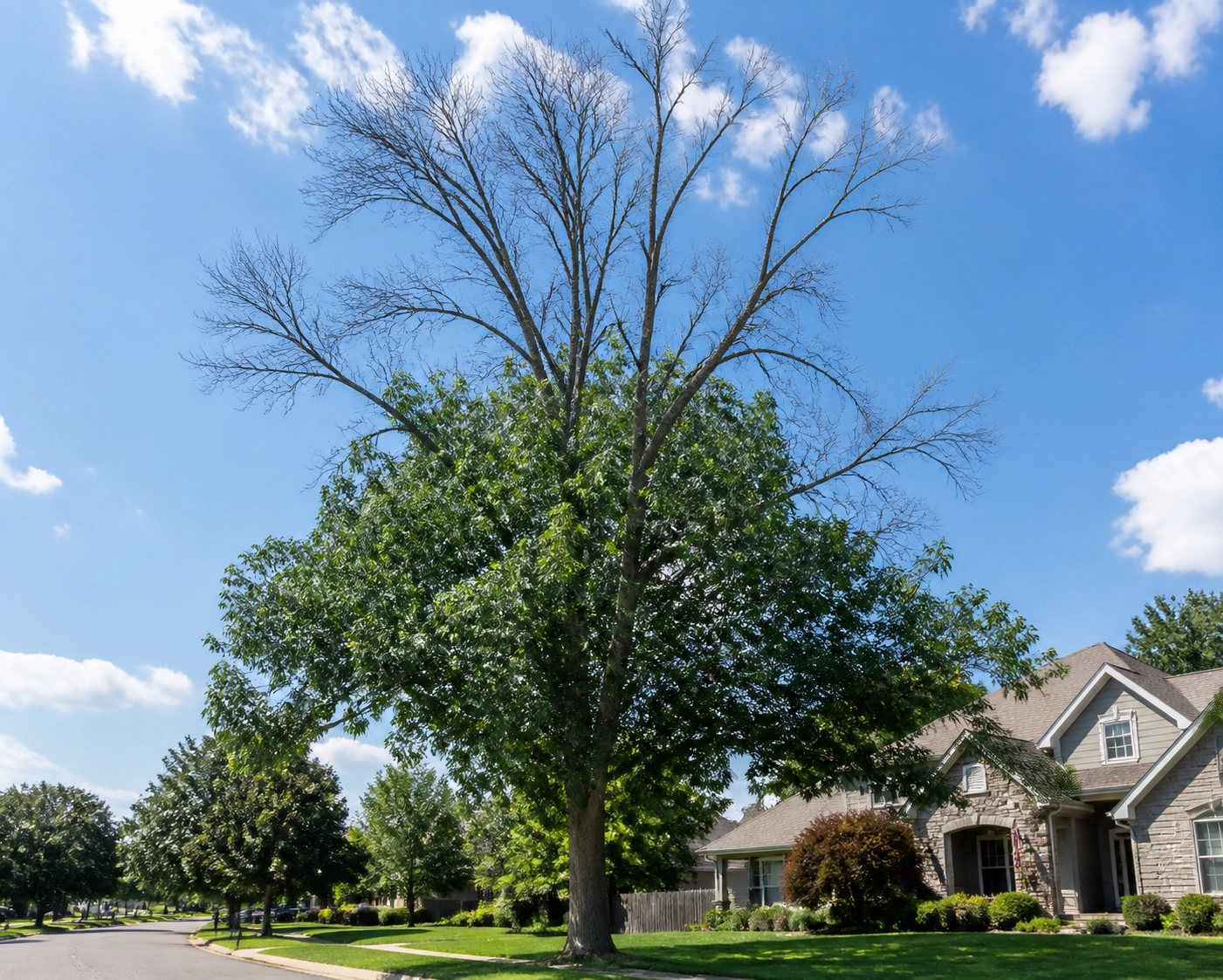
The first sign of EAB infestation appears at the tree's top. Because larvae disrupt nutrient flow, highest branches—furthest from roots—starve first.
You might notice:
- Leaves look smaller or more yellow than usual
- The canopy crown looks thin or bare
- More sunlight hits your yard through the tree than previously
Dieback usually starts at the top and moves downward. Once you lose more than 30% of canopy, the tree enters critical state. At this stage, professional assessment from Big Woody's Tree Service is essential to determine if the tree can be saved with systemic injections or requires immediate dismantling.
2. D-Shaped Exit Holes
The most definitive "fingerprint" of Emerald Ash Borer is the D-shaped exit hole. When larvae mature into adult beetles, they chew their way out of the trunk to find mates and lay eggs.
Unlike native borers leaving perfectly round or oval holes, EAB leaves holes shaped like capital letter "D." These holes measure only about 1/8 inch wide—roughly rice-grain sized. Because they're small, they're hard to spot on mature ash bark, but seeing them confirms beetle colonization. It's time to call Big Woody's Tree Service.
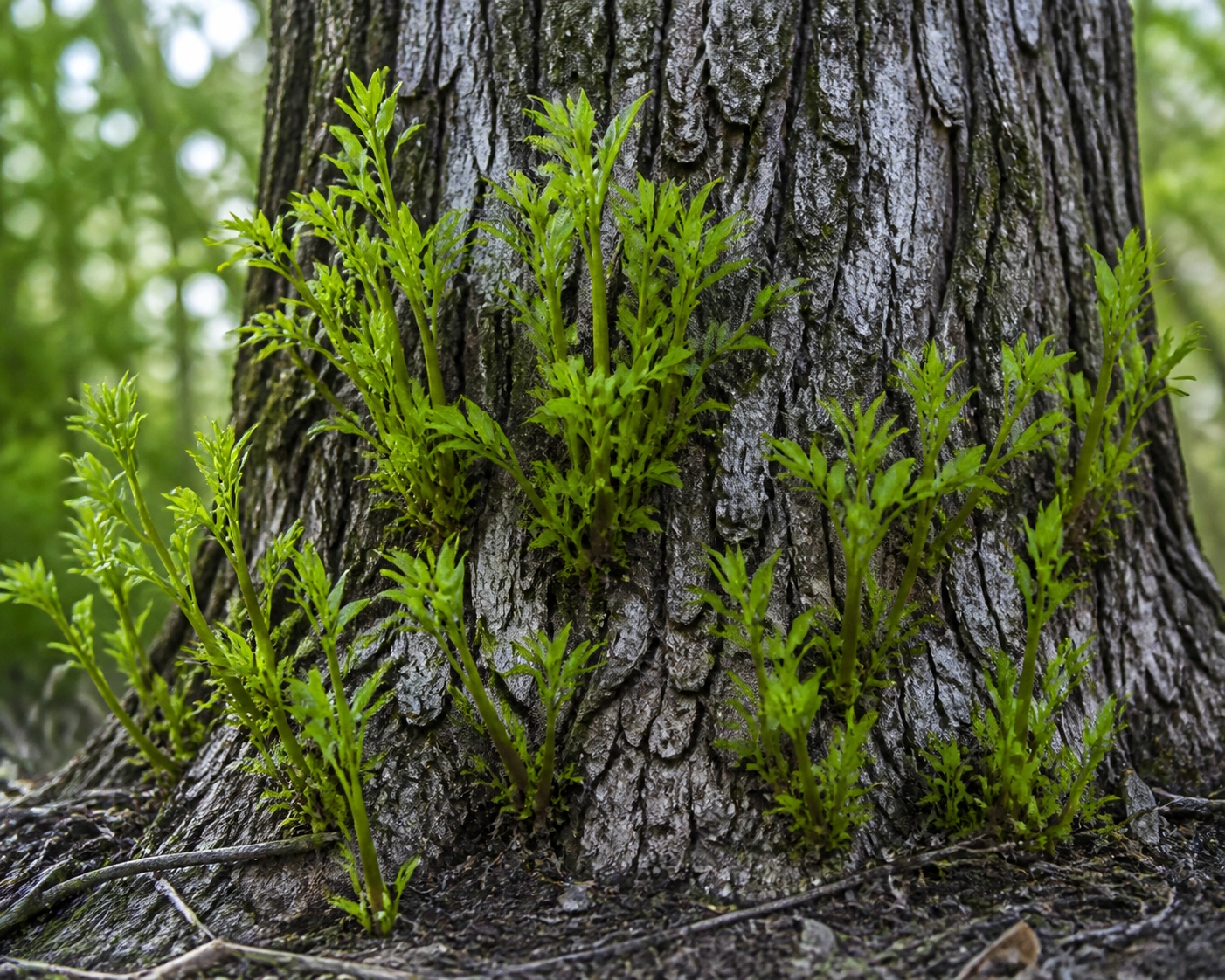
3. Epicormic Shoots (The Tree's "Last Gasp")
When trees face extreme stress, they enter survival mode. If larvae blocked nutrient flow to upper branches, trees attempt to grow new branches lower on the trunk or at the base.
These "epicormic shoots" or "suckers" are major red flags. A cluster of bushy, leafy growth popping from the main trunk means the top is effectively dying, and the root system desperately pushes new foliage to survive. In Cleveland and Athens, Big Woody's Tree Service often sees trees healthy at the base but completely dead at the top.
4. S-Shaped Larval Galleries and Bark Splitting
As larvae feed under bark, they create winding, serpentine paths called "galleries." You can't see these until bark begins splitting or falling off.
EAB damage often causes vertical bark cracks. Looking inside those cracks or peeling back loose bark reveals S-shaped tunnels etched into wood. These galleries contain "frass," a mixture of sawdust and beetle excrement—visual proof of the "strangulation" happening to ash trees. When these tunnels intersect, they completely "girdle" the tree, cutting off all life-support systems.
5. Woodpecker Damage and "Blonding"
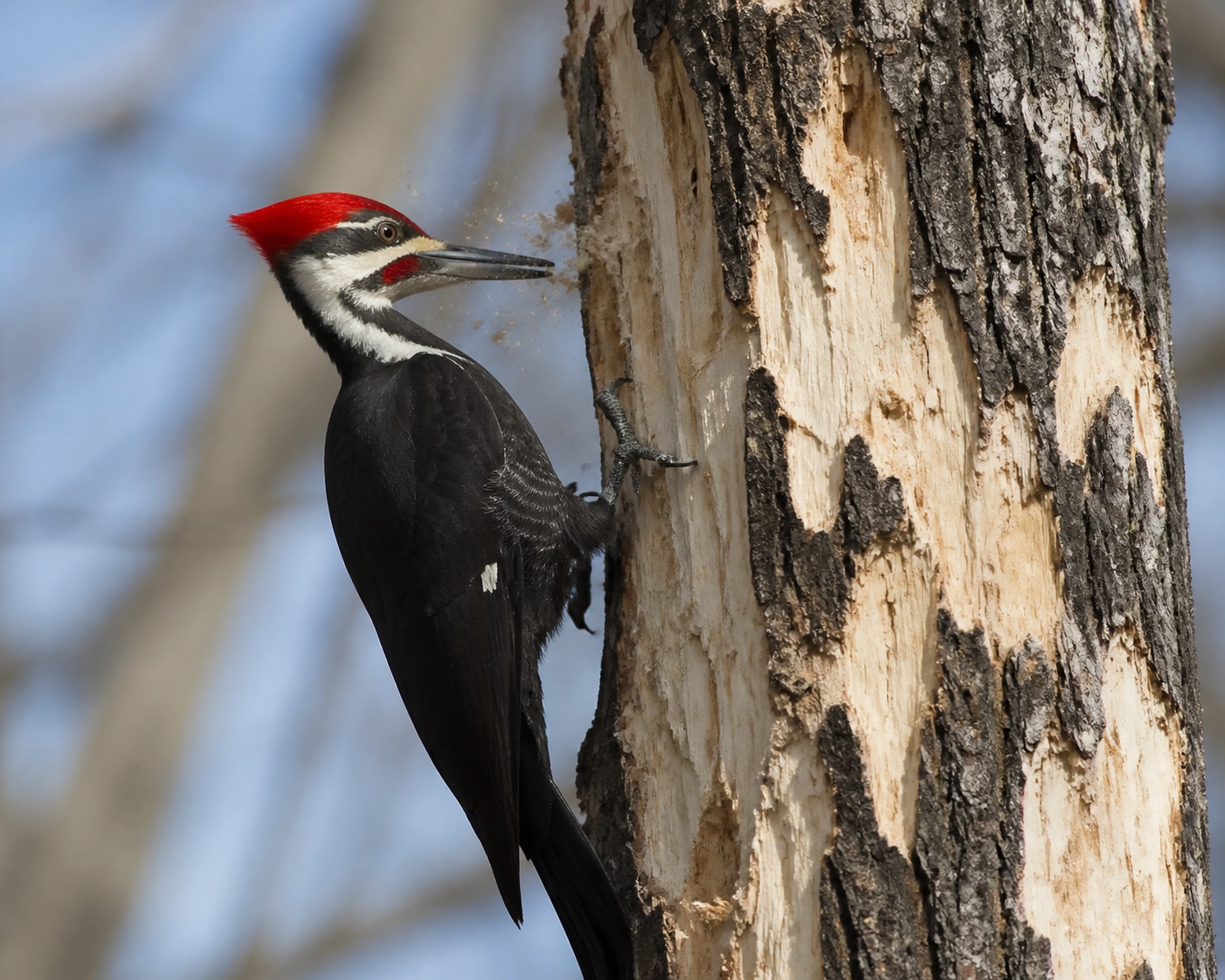
If you don't see beetles, you might see birds that eat them. Woodpeckers love EAB larvae. Unusual woodpecker activity on ash trees warrants closer inspection.
Woodpeckers strip away outer bark layers to reach larvae underneath, revealing lighter-colored inner bark and creating a patchy appearance called "blonding." Light-colored "bald spots" on trunks or larger limbs indicate high-volume larvae infestation. Big Woody's Tree Service should inspect it fast.
High-Volume Response: Treatment vs. Removal
Once Emerald Ash Borer is identified, you have two paths: Treatment or Removal.
Precision Treatment
If the tree retains more than 50% of its canopy, systemic insecticide treatments often work. These inject directly into the tree's vascular system, killing larvae as they feed. This effectively saves specimen trees that add landscape value. Big Woody's team can evaluate whether your tree is treatment-eligible.
Rapid Removal
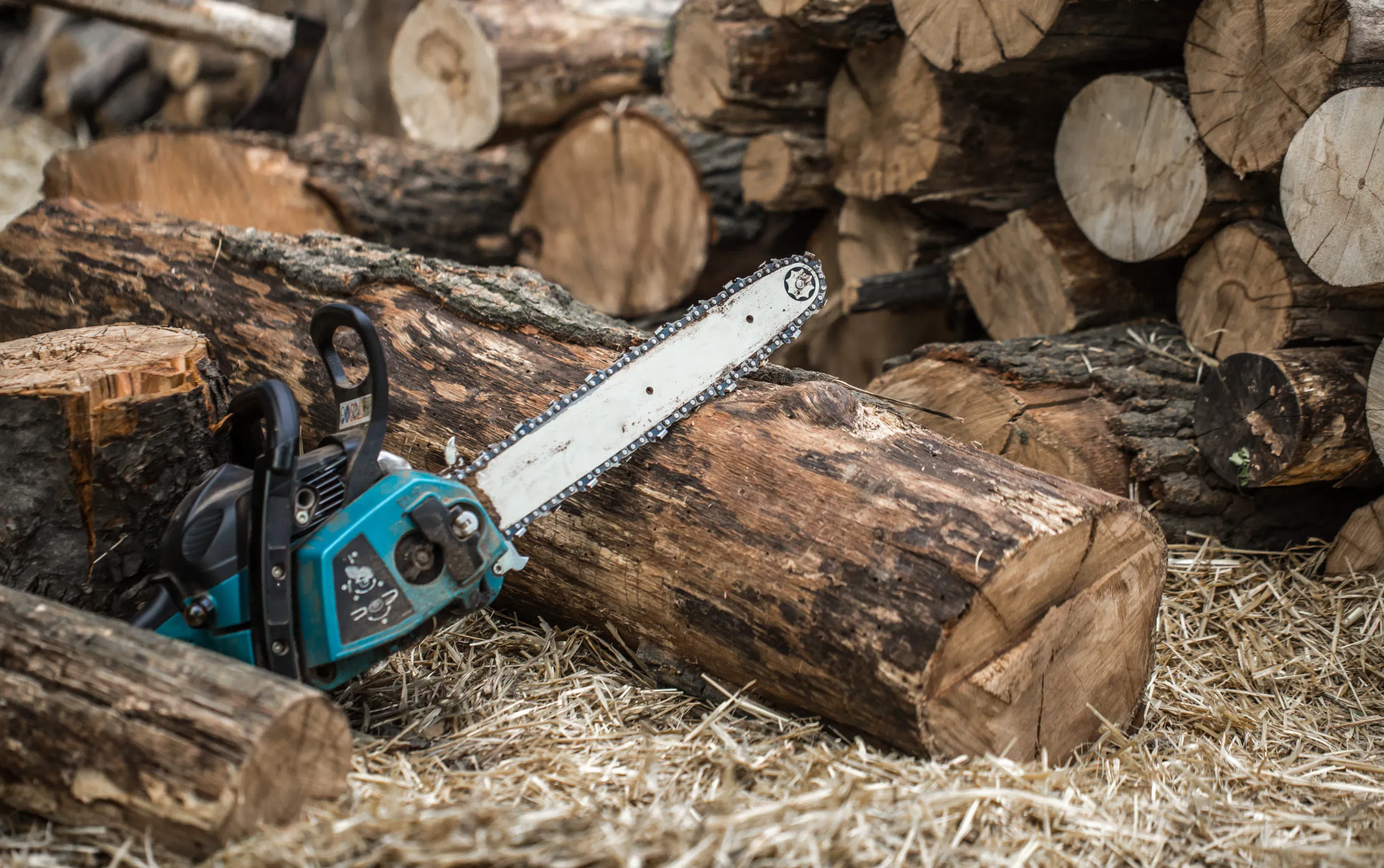
If the tree is more than 50% dead, treatment is likely too late. The tree becomes a liability. EAB-infested wood becomes extremely brittle quickly. Unlike other dead trees that might stand for years, ash trees killed by EAB can collapse or drop heavy limbs without warning.
When every minute counts—especially before storm season—you need a team that mobilizes quickly. Big Woody's Tree Service uses professional-grade equipment to safely dismantle hazardous trees. Whether it's a single tree or a land clearing project for larger properties, Big Woody's processes wood efficiently to minimize risk to your home.
Don't Move the Wood!
One major reason EAB spread quickly is firewood movement. If you have an ash tree removed, don't take that wood to campsites or give it to friends in other counties. Larvae can live in wood long-term, and moving it starts new infestations. Big Woody's can process wood into mulch or wood chips on-site, destroying larvae and preventing pest spread.
Why Choose Big Woody's Tree Service?
In Chattanooga, tree care options exist, but dealing with specific threats like Emerald Ash Borer requires speed and precision. Big Woody's Tree Service offers:
- Expert Identification: Distinguish EAB from native pests like Pine Beetle
- Specialized Equipment: High-capacity chippers to stump grinding—tools for any job
- Emergency Readiness: Respond fast when dying ash trees threaten homes, delivering emergency service in hours, not days
Take Action Before the Next Storm
Infested ash trees are ticking time bombs. Longer waits mean brittle wood, making removal more dangerous and expensive. Seeing thinning canopies, D-shaped holes, or heavy woodpecker activity means calling professionals.
Don't let invasive beetles dictate property safety. Big Woody's Tree Service offers professional trimming and maintenance to keep healthy trees strong and expert removal for unsalvageable trees.